

TL;DR
|
Building a successful ecommerce brand requires significant investment in product development, marketing, customer acquisition, and marketplace visibility. However, once your products gain traction, other sellers often try to benefit from the reputation you have built.
Unauthorized sellers may list your products without approval, counterfeiters may imitate your products, and sellers may use your brand name to attract customers without maintaining your quality standards.
The scale of this problem continues to grow. The U.S. Trade Representative’s 2025 Review of Notorious Markets for Counterfeiting and Piracy identified 37 online markets and 32 physical markets reported to facilitate substantial trademark counterfeiting or copyright piracy, highlighting how online channels continue to create opportunities for brand misuse.
For ecommerce brands, this highlights why brand protection is important. However, protection cannot stop at owning a trademark. Your brand needs an active enforcement strategy that identifies misuse, removes violations, and protects your marketplace presence.
Why Brand Protection Is Important For Ecommerce Brands
Protect Your Revenue From Unauthorized Sellers
Unauthorized sellers can create direct revenue problems for your business. When multiple sellers compete for your product listings, you can lose control over:
- Product pricing
- Customer experience
- Inventory visibility
- Buy Box ownership
- Brand positioning
For example, an unauthorized seller offering your product at a lower price may attract customers who would otherwise purchase directly from your authorized channels. While the sale appears positive on the surface, you lose visibility into who represents your brand and how your products are handled.
Brand enforcement helps you identify these sellers and take appropriate action to maintain control over your distribution.
Counterfeit Products Can Damage Customer Trust
Counterfeit products create risks beyond lost sales. Customers who purchase fake or poor-quality versions of your products often associate the negative experience with your brand. This can result in:
- Negative reviews
- Customer complaints
- Reduced repeat purchases
- Lower marketplace rankings
CBP states that counterfeit and pirated goods threaten U.S. businesses, consumer safety, and innovation by creating unfair competition and damaging trust in legitimate brands.
For ecommerce businesses, protecting your reputation requires finding and removing unauthorized listings before customers encounter them.
Trademark Registration Alone Does Not Protect Your Brand
A registered trademark gives you legal ownership of your brand identity, but it does not automatically stop misuse. Your trademark provides the foundation for enforcement. However, you still need to identify:
- Who is using your brand name without permission
- Which listings violate your rights
- Where counterfeit products are being sold
- Which marketplace actions are required
Many ecommerce violations happen across multiple marketplaces, websites, and seller accounts. Without ongoing monitoring, these issues can continue unnoticed. Effective brand enforcement turns your trademark rights into practical action.
Common Brand Enforcement Challenges Ecommerce Brands Face
Unauthorized Marketplace Sellers
Unauthorized sellers often appear after a product becomes successful. They may resell products without approval, use your product images and descriptions, compete against authorized sellers, and create confusion about legitimate distribution
Removing these sellers requires identifying violations and following marketplace enforcement procedures.
Counterfeit Listings
Counterfeit sellers attempt to replicate your products, packaging, branding, or listings.
These listings can be difficult to detect because counterfeit sellers often copy product photos, descriptions, reviews, and brand keywords. Continuous monitoring helps identify suspicious listings before they gain traction.
Brand Listing Abuse
Some sellers misuse your intellectual property to increase their visibility. Examples include:
- Using your trademark in product titles
- Copying your listing content
- Creating misleading advertisements
- Claiming association with your brand
These actions can divert customers away from legitimate sellers.
How Brand Enforcement Protects Ecommerce Growth?
A proactive brand enforcement strategy helps you maintain control as your ecommerce presence expands. The process includes:
Marketplace Monitoring
Your brand is continuously reviewed across ecommerce platforms to identify potential violations. Monitoring looks for unauthorized sellers, counterfeit products, trademark misuse, and pricing violations
Violation Identification
Not every seller activity requires the same response. A proper enforcement process evaluates seller authorization status, product authenticity concerns, trademark misuse, and marketplace policy violations. This ensures actions are focused on genuine threats.
Enforcement Actions
Once violations are confirmed, brands can pursue appropriate actions, including marketplace complaints, seller removal requests, listing takedown requests, and legal escalation when necessary. The goal is to restore control over your brand presence while reducing future violations.
Four Steps To Strengthen Your Ecommerce Brand Protection
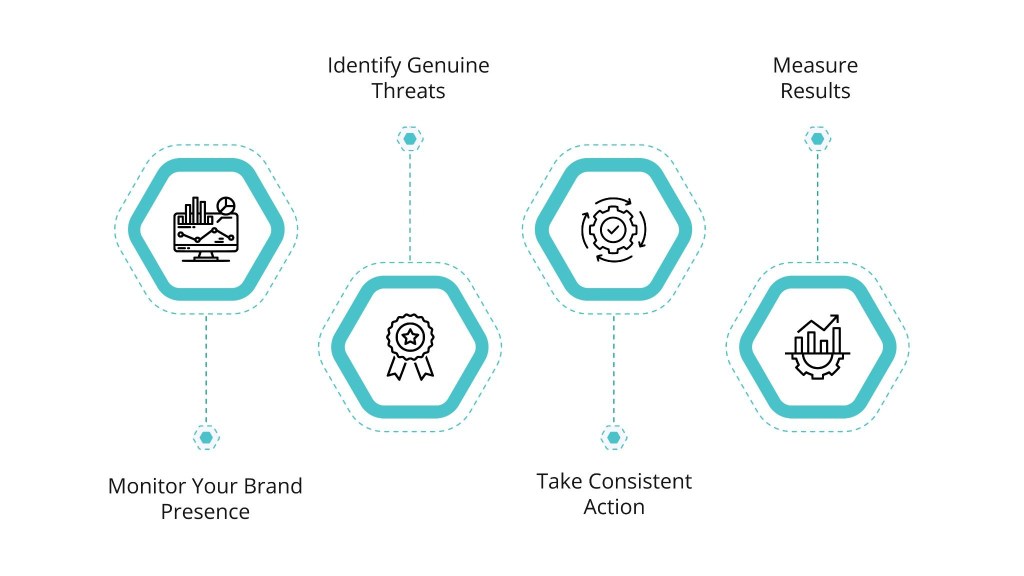
Monitor Your Brand Presence
Regularly monitor where your products, trademarks, images, and listings appear across ecommerce platforms, marketplaces, and third-party websites. This helps you identify unauthorized sellers, counterfeit listings, and misuse of your brand assets before they impact customers.
For example, a brand selling premium skincare products may discover that an unauthorized seller has created a marketplace listing using its product images and brand name. Early detection allows the brand to investigate the seller and take corrective action before customers purchase potentially unauthorized products.
Identify Genuine Threats
Not every third-party seller creates a risk for your business. A successful enforcement strategy requires distinguishing between authorized sellers, legitimate resellers, and sellers who violate your brand rights.
Evaluate factors such as seller authorization, product authenticity, pricing behavior, and use of your intellectual property. For example, a seller offering your product without approval and using your trademark in their store name poses a different level of risk than an authorized retailer selling through an approved channel.
Take Consistent Action
Identifying violations is only the first step. Effective brand enforcement requires consistent action through marketplace reporting systems, intellectual property complaint processes, and other available enforcement channels.
For instance, if a counterfeit listing appears on an e-commerce platform, submitting a detailed infringement report with supporting evidence can help initiate the removal process. A consistent enforcement approach also discourages repeat violations by showing that your brand actively protects its rights.
Measure Results
Tracking enforcement activity helps you understand whether your efforts are reducing risks and protecting your brand value over time. Key metrics can include removed listings, repeat offenders identified, improvements in marketplace compliance, and potential revenue protected.
For example, if a brand notices frequent unauthorized sellers appearing in a specific marketplace category, this data can help identify patterns and improve future monitoring and enforcement efforts.
Strengthen Your Marketplace Control With ESQgo®’s BELU Brand Enforcement
Marketplace violations rarely disappear permanently. A seller removed today can return through another account, and a counterfeit listing taken down from one platform can appear on another. Without continuous monitoring and enforcement, brands often find themselves repeatedly addressing the same issues while losing control over pricing, customer experience, and marketplace visibility.
This is where BELU Brand Enforcement by ESQgo® helps. BELU provides a structured approach to identifying marketplace risks, documenting violations, managing reseller activity, and taking appropriate enforcement action across Amazon and other online marketplaces.
Through BELU Brand Enforcement, ESQgo® helps brands:
- Monitor marketplace activity across your catalog to identify unauthorized sellers, counterfeit exposure, and potential brand misuse.
- Analyze seller behavior and marketplace risks to determine which violations require immediate attention.
- Build evidence-backed enforcement strategies with documented findings, reporting processes, and escalation workflows.
- Strengthen long-term marketplace control by creating a consistent system to protect your brand presence and revenue opportunities.
Instead of reacting to violations after they impact your business, BELU helps you take a proactive approach to protecting your ecommerce brand.
Speak with a Brand Enforcement Attorney
FAQs
Brand protection is important because ecommerce brands face risks from counterfeit products, unauthorized sellers, and intellectual property misuse. Effective enforcement helps protect revenue, customer trust, and marketplace visibility.
No. A trademark provides legal ownership, but active monitoring and enforcement are required to identify violations and take action against unauthorized use.
Brand monitoring should be ongoing because unauthorized listings and seller violations can appear at any time across different marketplaces.
Can Brand Enforcement Help Recover Lost Revenue?
Yes. By removing unauthorized sellers and counterfeit listings, brand enforcement can help reduce revenue losses from marketplace violations and protect authorized sales channels.

ESQgo



